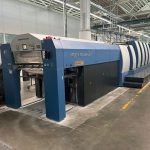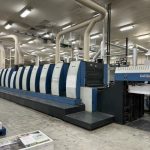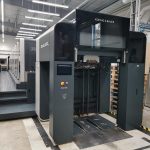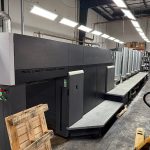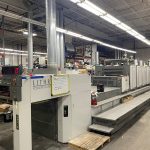
Color control is one of the most important differences between a merely capable offset press and a consistently profitable one. On a traditional press, the operator pulls a sheet, measures a control strip with a handheld or console-mounted instrument, interprets the result, adjusts ink keys or register, and repeats the process. An inline system measures color and often register automatically while sheets continue through the press.
The choice is not simply “new technology versus old technology.” It is a decision about run length, job frequency, staffing, quality requirements, waste, maintenance risk, and capital cost. A disciplined operator using a well-maintained manual or offline system can achieve outstanding results. Inline scanning becomes most valuable when a plant must reproduce those results quickly, repeatedly, and with less dependence on individual operator technique.
What the Terms Actually Mean
Manual measurement usually means the operator stops or samples the run, pulls a sheet, and checks solid ink density, dot gain, gray balance, spectral values, or ΔE with a handheld device. Some presses also use an offline or console-mounted scanning system: the operator places the pulled sheet on a measuring table, and a motorized head scans the color bar before sending recommended or automatic ink-zone corrections to the press console.
Inline measurement moves the measuring device into the press. Depending on the system and press configuration, it can read a control strip on each sheet or at frequent intervals, track process and spot colors, monitor register, and send corrections directly to the press controls without interrupting production. Modern systems are spectrophotometric rather than density-only, giving the pressroom a more complete view of how closely the printed color matches the approved target.
Important distinction
A console-mounted scanner is automated, but it is not truly inline. The sheet still must be pulled and presented to the scanner. In equipment listings, confirm whether “automatic color control” means an offline scanning table or an in-press measuring system.
Side-by-Side Comparison
| Factor | Manual / offline measurement | Inline scanning |
|---|---|---|
| Makeready | Repeated sheet pulls, measurements, and operator corrections. | Measures during press operation and can correct automatically, reducing the path to sellable color. |
| Production monitoring | Quality depends on how often the operator samples the run. | Continuous or high-frequency monitoring catches drift sooner. |
| Waste | Can be low with a strong operator, but more sheets may be consumed while reaching color or detecting drift. | Usually reduces startup and running waste, especially across many job changes. |
| Labor and skill | Requires disciplined sampling, interpretation, and corrective action. | Automates routine control, allowing the operator to supervise more of the process. |
| Consistency | Strong results are possible, but may vary by shift or operator. | Applies the same measurement and correction logic from job to job. |
| Documentation | Often requires separate recording or workflow steps. | May create job-level quality records automatically when integrated with workflow software. |
| Capital and service | Lower acquisition cost; handheld tools are comparatively simple to replace. | Higher purchase and repair exposure; sensors, calibration, software, and OEM support matter. |
| Best fit | Longer runs, lower job frequency, flexible tolerances, or constrained capital. | Short runs, frequent changeovers, brand color, packaging, lean staffing, and demanding repeat work. |
Where Inline Scanning Creates the Most Value
1. Frequent makereadies. A plant running dozens of short jobs per shift pays for every extra sheet and minute spent reaching color. Inline control attacks that cost on every changeover, making the return cumulative rather than dependent on one large job.
2. Tight brand-color requirements. Packaging, labels, cosmetics, food, pharmaceutical, and national-brand work often involves tight tolerances and critical spot colors. Automated spectral measurement helps maintain a defined target throughout the run and gives the printer a more defensible quality record.
3. Reduced operator availability. Inline control does not eliminate the need for an experienced press operator. It does reduce the repetitive cycle of pulling, scanning, interpreting, and correcting sheets, allowing scarce talent to focus on mechanical condition, substrates, ink-water balance, defects, and overall production flow.
4. Repeat work across shifts. Stored job data, presetting, and automated measurement can shorten the learning curve when the same job returns or moves to another shift. The greatest gains occur when the measurement system is integrated with prepress, ink presetting, and production reporting—not treated as an isolated accessory.
Where Manual or Offline Measurement Still Makes Sense
Manual control remains rational when the press runs relatively few jobs, run lengths are long, tolerances are moderate, and an experienced crew can hold color with limited intervention. It is also attractive when acquisition budget matters more than maximum automation, or when an older press platform cannot support a reliable inline retrofit.
An offline scanning console can be an effective middle ground. It provides objective, zone-by-zone measurement and automated correction without the cost and complexity of a full inline system. For many commercial printers, the economics of that arrangement are compelling—particularly when operators already have a disciplined sheet-pull routine.
What to Inspect When Buying a Used Press
Do not assign value to an inline system merely because it appears on the specification sheet. Confirm that it powers up, calibrates, locates the control strip, communicates with the press console, and actually closes the loop by making ink and register corrections. Run a live demonstration using a representative job and substrate.
Ask which software licenses, calibration tools, reference tiles, handheld instruments, control-strip libraries, servers, and workflow components are included. Verify sensor condition, service history, obsolescence status, and the availability of OEM or qualified third-party support. A discontinued computer or missing license can turn an expensive automation package into dead weight.
Finally, evaluate the entire press. Inline measurement cannot compensate for worn ink trains, unstable dampening, damaged blankets, poor rollers, inconsistent plates, weak temperature control, or unsuitable consumables. Automation is most valuable when the mechanical platform is capable of responding predictably to its corrections.
The Bottom Line
Inline scanning is usually the better productivity tool; manual or offline measurement is often the lower-cost ownership choice. The right decision depends on how many makereadies the press performs, how expensive each minute and waste sheet is, how tight the color tolerance must be, and how reliably the plant can staff the press.
For a buyer comparing used offset presses, the correct question is not simply, “Does it have inline color?” Ask instead: “Is the system complete, supportable, demonstrated under production conditions, and valuable for our actual job mix?” That answer determines whether the option is a profit center or an unnecessary repair risk.